A while ago, I celebrated 12 years of sobriety. Of course, the celebration was no raucous boozy chaotic affair like days gone by – but just a nice, warm affirmation that my life has moved a long way away from the pitiful drudge it had degenerated into in active addiction.
It also presented the opportunity to acknowledge the many, many good souls who have helped me along the way. If you’re one of those reading this, whom I haven’t already thanked – my profound gratitude to you.
(If you’re interested in how I got sober in the first place, you can read my getting sober blogs – starting here )
Today, I can say I feel truly blessed to live the life I have – my relationships with my wife, family and the people I love have been restored. I have a sense of purpose in my life and feel like I am moving somewhere near the man in my heart I always wanted to be.
Look, I’m not saying for one second – my life is amazing and that every waking minute is an exciting adventure into crazy new experiences. I’m not sure many people’s lives are like that – besides living that way sounds way too knackering for the likes of me who still has a significant lazy stripe running through my core.
I don’t think either that my recovery journey has been anything particularly remarkable. Millions of people the world over are recovering from addiction, depression and anxiety – many following 12 step programs like I have.
Also, another “hold the front page moment” I have realsied is this Epic Quest I thought I was on was really just about growing the fuck up after 30-odd years of living – I use the term advisedly – my life as a man-child stuck up my own rearend.
But they say once you have it, give it away – and while the things I am about to share are hardly original ideas and thoughts, they have served me incredibly well in finding a way to live happily in sobriety.
Disclaimer: this is strictly from my experience and I couldn’t say that I have adhered to what has been suggested to me anything near like perfection, because, after all, “we are not saints”.
- One day, one hour, one minute and one second at a time – changing for the rest of my life seemed impossible, but then I was told just focus on one day at a time. And what if that’s too much? Then focus on getting through the next hour. In my recovery, I realised I have a natural propensity to anxiety and fretting about the future. The one day at a time adage helped me to begin to deal with that and get through the inevitable difficult days when they came and when they still come today. Just break it down into bite size chunks – much more manageable. Yesterday’s history and tomorrow’s mystery – today’s a gift which is why it’s called the present. Bosh!
- I can’t do it on my own – my addiction and depression want me to isolate and disconnect, the tricky little bastards! The antidote is seeking connection and opening myself up to the universe and the legions of people who want to help. It’s seriously powerful and humbling to know how many people who are genuinely out there and are willing to go out of their way to help me/you/others if we let them. I don’t think I would have lasted 12 weeks or even 12 days at the beginning without the help I got from others when I got sober. Joining a 12-step group was a game changer, even though it didn’t feel like it at the time. I felt like I had nothing in common with “these people”, but then I started listening to them sharing their drinking and drugging experiences and I realised I had MASSES in common with them. And I still need them today – to help me get through and stay sober – because, man, there are still some days, even 12 years down the track, when it’s like pushing up a mountain of shite up a mountain. Life still happens. I still need to accept I need help.
- Spiritualized – the old way of living had stopped working for me a long time ago if it had ever really worked at all. I was consumed with myself and fear, and life often confounded me. I was totally dependent on my poor wife who by the end had had a gut full of me. I needed to change and break up this unhealthy relationship and obsession with me, myself and I. But how? I had to accept that trying to do things my way on my own was only going to keep me trapped in my addiction. Living a more spiritual way of life for me just means accepting there is something bigger than me that I can and need to turn to for help, connection, guidance etc. That is others. That is meditation. That is going on retreats. That is sitting with myself in silence sometimes checking in with myself where my head is at. That is recognising I am not my thoughts or my feelings. That is reading spiritual books and having an open mind. That is cultivating compassion for myself and others. That is being of service. And, yes, that is prayer and the belief in a Higher Power – whatever that really is. I try to have an open heart and an open mind. When I do – when I find that deeper connection, my life seems to flow really well, even with the challenges that come up. I can’t tell you how it works, but it does. I guess you could call that faith.
4. Letting go – my old way of living was not serving me well and for those around me, it was becoming somewhere between me being a pain in the arse – to medium-to-high-level aresholery on my behalf, to becoming a total nightmare to live with. One of the historical products of my warped pre-recovery ego and the fear that consumed me, was arguing the toss and being defensive – working up a self-righteous head of steam and essentially being a right contrary fecker. I’d hold on to resentments, grudges and precious princess scales of wounded indignation. All this did other than pissing some people off, was toxify my thinking, keeping me locked in negativity and essentially putting myself back in the direction of a drink to “take the edge off” the ill feeling by which I was consumed. I have written another article about the complex relationship I had with my dad and how much I blamed him for many years for the way I felt about myself and the world – turned out with not that much justification. When I let go of that resentment when I made amends to him later on – I felt this massive weight shift off me. It was the most dramatic of examples to me that letting go of that kind of shit is hugely freeing, both psychically letting inner energies flow much easier. Today, I carry a stone in my pocket – whenever I feel myself getting triggered I touch it to remind myself of how short my time on the planet is and generally how insignificant things that bend me out of shape are – so is it worth holding onto? Hell no, so I let it go.
5. Checking in with myself – being able to manage my thoughts and feelings better is contingent of being aware of them in the first place. I realise now when I was in active addiction, I had very little self-awareness, if anything I was delusional about my life and in denial about the impact of my behaviour on others particularly those around me. Through my program of recovery, I went through a self-inventory process of all my fears, resentments, harms that I had done to others and sexual conduct. This paved the way to being much more self-aware and getting into the practice of carrying out smaller inventories on specific things that bothered me or triggered me when they came up – and, rest assured, they do come up – although today much less frequently. Every morning, I check in with myself to see where I’m at through meditation and sometimes journaling (see below). I realise there’s an element of self-absorption here – but I have learned if I am more truly aware of where I am at, I am in a better position to be grateful for it if I’m in a good space and do something about it if not and enter into the day with more caution if my head’s doing its old thing – hopefully heading off any reactive, damaging behaviour at the pass. This of course doesn’t always work – but it at least gives me a better chance of getting through the day without causing trouble…and ultimately without picking up a drink. And when you’re me – that’s a win some days!!!
6. This too shall pass – this single phrase has helped me get through many difficult situations. My depression used to tell me, “This is how it will be forever – you’re completely fucked, mate.” “Ah, thanks, Depression, that’s really helpful – you’re a real pal,” I would respond. “Well, there’s no need to be sarcastic about it, is there?” “Oh, piss of depression, you’re such a killjoy.” Aaaaanyway, the point is my head will tell me my current state is fixed – but the reality is a million thoughts can pass through my head everyday – I can have experienced a full spectrum of emotions – anxiety, calm, serenity, euphoria, irritation, stress, anger, regret, love and euphoria between getting up and lunchtime on any given day.That said today, my temperament is generally much more stable than that. Whatever it is I am going through will pass, maybe not today, maybe not tomorrow, but at some point. The flip-side of this is that the good times pass too – but that’s OK, recognising that keeps me grounded and reminds me that I am not, nor ever will be the finished article, there is always more room for growth and on that theme…
7. There is often growth through pain – for me and many alcoholics/addicts – one of the main reasons for doing what we did in active addiction was to avoid pain and discomfort. Stressed out at work? Have a drink to take the edge off. Feeling strung out and tired? Have a line or two of speed/coke to pep yourself up. Feeling bored, dejected – have a gamble and spice things up. The list of uncomfortable circumstances and emotions and substances and addictive behaviours is endless. Most of us are avoidant to one extent or another, but for addicts avoidance is a constant MO. As a result, for many years I was emotionally stunted. My wife found herself with three children to look after, rather than just the two she gave birth too – and the third one she didn’t was particularly demanding. Through the program of recovery I have followed, and through reflection on parts of my life where I have been forced to go through the wringer, I can see that is when I have done most of my internal growing, with resilience, greater self-awareness and even on occasion perhaps a little wisdom won. But to get that, I have to be prepared to endure the discomfort and pain, take the actions when necessary and put in the hard work. A couple of examples of this would be working up to doing my Step Nine amends for those I have wronged. Finding the courage to make amends to my dad for the years of resentment I held towards him (pretty much all of it unfounded), for squandering the multiple opportunities he and my mum had given me in life and for not being around when he probably could have done with a bit of love and support. Facing up to that was hard and very painful. Yet once I had done it and forgiven him for the perceived wrongs he had done to me and he had forgiven me, a huge weight was lifted and I was able to move forward emotionally, mentally and from a perspective of wider self-awareness for the first time in years. Of course, when you’re in the thick of whatever psychic soup you’re in – it can feel like you’re going through hell – but come out the other side intact – sober – and there’s often gold to be had amidst the shite. Also, when you are in the thick of it – I refer you to my previous point/mantra, this too shall pass.
8. Drawing on many different wells – my experience has been that when I sincerely accepted I can’t do recovery on my own, when I opened up my heart and head – help and support came flooding in from many different sources. My 12-step program and recovery community that I belong to is my foundation, but there are also a whole number of different places/sources/people from which I take strength.
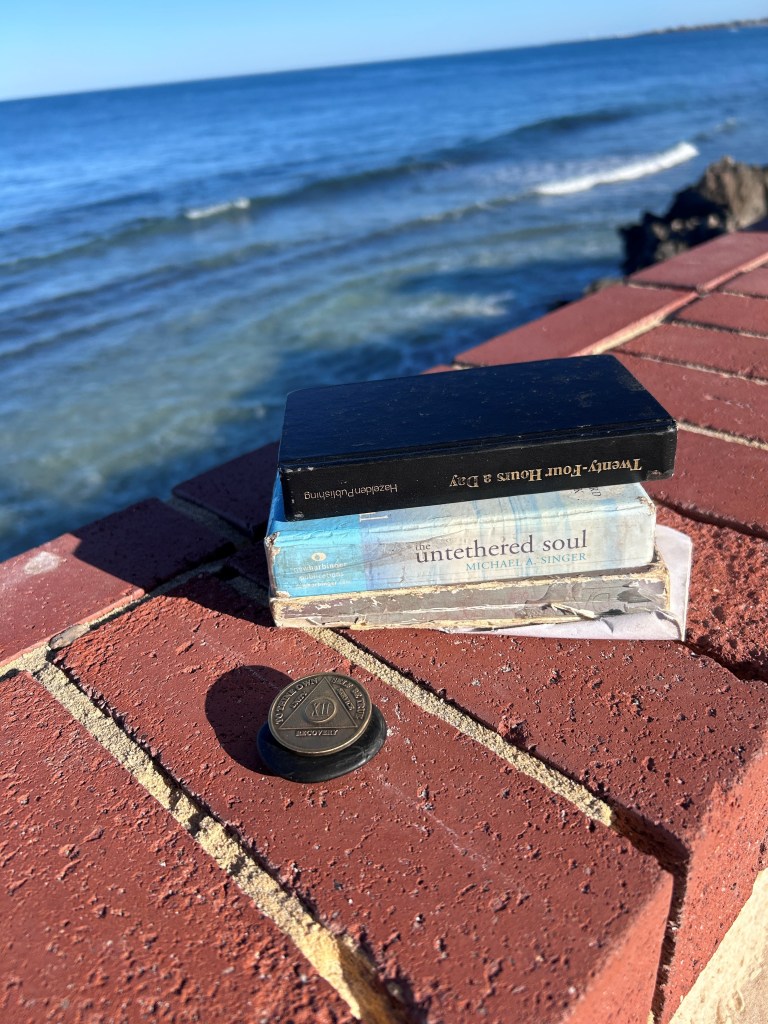
Spiritual writing/podcasts are a great source – some books have been absolute game-changers – The Untethered Soul by Michael Singer recommended by a dear friend in mental health recovery herself – changed the way I understood myself, my heart and my thoughts, Total Meditation by Deepak Chopra changed the way I understood my consciousness, introduced me to the powerful relaxation/de-stressing/falling asleep technique of vagal breathing and provided numerous tips around the practice of meditation (which I will come to) and early on in particular The Jewish 12 Steps to Recovery was a great source of strength and hope and provided a Jewish perspective on recovery. There have been numerous other books, audiobooks, 12 step program “speaker tapes” if alcoholism is your addiction you are trying to recover from I found Sandy B’s talks very relatable and very funny.
Way before I got into recovery, I discovered physical exercise to be hugely therapeutic, transformative when it comes to mood and energy and a great start to the day if done in the morning. The physical side of recovery isn’t often talked about, but it’s hugely important in my book. The head does a lot of the heavy lifting in recovery, but the body often holds the stress and strain of it, particularly if going through withdrawal. So, leaning into the physical helps release the mind and tension in the body, oxygenates the brain – I also found boxing to be very therapeutic – hitting punchbags and pads hard is a great way to channel frustrations! Exercise is a central plank of my well-being today.
I have turned to mental health professionals at various points in my recovery and have found their assistance and support to be hugely helpful. I simply would not have gone down this path when I did were it not for a brilliant psych called Barbara – who helped me break through my considerable denial around my alcoholism and also through schema therapy showed me where certain narratives that I had been stuck in for years kept me in my active addiction Later on, another great psych, Nigel, helped me finally get through a recurring schema that had continued to dog me for years, even after getting sober, by helping me reframe it. While I haven’t taken anti-depressants for many years, I would not hesitate to again if I was really struggling and my GP, Dr Deb – another huge source of support, recommended I do so.The point here is I found my foundation for my recovery in my 12-step program, but there are so, so many other wells from which to draw – why not? Steep yourself in what is available – find what works for you ultimately.
9. Retreat yourself – for probably the last 10 years, I have gone on retreats sometimes every six months, sometimes more intermittently. I go with a bunch of good guys from my 12-step program from Friday morning to Sunday lunchtime and we talk about recovery stuff in a secluded setting and enjoy each other’s company – but a good part of it is taking time to sit quietly, sometimes in reflection, sometimes in meditation and sometimes, just in being- away from the pull, demands and noise of day to day life. I find it marvelously rejuvenating – and it’s increasingly become an oasis in time I find myself looking forward to. It’s a kind of spiritual recharge and something I thoroughly recommend to anyone who might find themselves getting strung out, stressed, overwhelmed or grappling with some internal or external conflict and needs some space to get a better sense of perspective.
10. When I’m wrong promptly admit it – one thing my recovery program has helped me do is “resign from the debating society.” As part of my way of dealing with my insecurities and the feeling I was useless and incompetent, was to double-down and argue that I was right about everything. This inevitably led me into conflict with others and ultimately myself. It also meant that when I’d wronged someone or done something wrong, my first instinct was to deny it. The approach to life I lead today demands rigorous honesty, holding on to things that I have done dishonestly was a trait from the past – it added to my psychic baggage and polluted my spirit even further. You can’t really change if you’re not facing up to your mistakes and when you wrong others. On the flip side, owning my shit and making amends for it promptly and sincerely when I stuff up means my life generally goes so much smoother today – no pointless arguments and a realisation that making mistakes is inevitable and they present opportunities to learn and grow – if I am open to it – and that means acknowledging and admitting my mistakes when I make them. I see so many people in addiction locked in resentment to their partners, their families and others. Sometimes justifiably – but ultimately, they hang on to that shit, and it keeps them locked in their addiction. It’s hard at times – but letting go of that stuff can be truly liberating in my experience.
11. What’s the story, morning glory? – I’ve learned in recovery that my head can be a very hectic space, prone to black and white thinking, catastrophising, dark and negative thinking – and in early recovery that was just between waking up and getting out of bed! I was advised to get a morning program, a space every morning where I can settle my head, spiritually connect and set my intentions and heart orientation for the day ahead. What does that look like? I find a place where I can sit quietly for 15-20 minutes – some days I am lucky enough to get to do it by the ocean on the way into work. Sometimes I write a few lines in a journal getting down on paper where’s my head at right then and how I want to be that day. Then I read a couple of excerpts from spiritual books and then I meditate for 10-20 minutes depending on how much time I have. The first part of the meditation is just trying to be present, breathe and watch my thoughts flying around. The second part is praying to my version of a Higher Power. Now I can’t really define what this is, call it the Universe, good, love, I don’t know it’s quite nebulous – all I know when I feel more connected/aligned to it, I function a lot better generally, have better instincts and find the capacity and energy to be more of a positive influence in my small sphere of influence. First there is gratitude for the great life we have and all the beautiful people I have in my life, then I pray for all of those who are going through the ringer one way or another in my life and beyond and then finally I ask for direction for the day ahead to be a force for good in the world and do whatever my Higher Power wants me to do. When I do all of these things – I usually go into the day with a positive frame of mind and a good energy. That’s what works for me – but like all of this shit – you have to find out what works for you. All I can tell you, is that I would no sooner go without breathing as I would go without my morning program.
12. Get into service industry – it might not have been her quote originally, but a wise woman once told me if you want to feel better self-esteem do estimable things. For years I bounced between feeling like a worthless piece of shite and that I was something truly special with a special fate awaiting me, even though I had never done anything at all to deserve the “special one” tag I bestowed on myself – the egomaniac with the inferiority complex. I was not anywhere near the man I wanted to be and that kept me trying to numb myself out with the booze. It’s a central tenet of the 12-step recovery program that you use your experience of recovery to help others struggling with addiction – but also you “practice [the program’s] principles in all your affairs.” So today I try to help put where I can with other alkees and addicts, or anyone struggling emotionally or mentally – because my experience gives me empathy and a degree of insight into what they’re going through – but above and beyond that – what I was trying but failing and falling short of all the time before I got sober…just being a decent husband, a decent father, a decent employee, a good friend and basically just a decent human being. Nothing special in that, you may say, and there’s millions of good folk out there who meet these basic standards – but for this recovering alcoholic – striving for those levels and largely meeting them (not always, because as mentioned above – we’re not freaking saints!) is no small achievement. And it is in those things that I get a sense of purpose, love and connection. And that is enough, and that makes me enough.
And that is more than enough from me already!
If any of you get something out of that lot – then that’s made writing this worthwhile and if you didn’t, well it’s up to you, my friends, strictly you and you. If you’re on a recovery path – I wish you well and if, not, I wish you well anyway!
Thanks for letting me share…


Ben, reading this is gold and life lessons, learning for us all. I sometimes quote two people I know that have bravely found a way to turn their life around, you are one . This helps to understand day by day what it entails. Thank you for your courage and honesty in sharing. I have no doubt it will inspires and help many others. 🙏🥰
LikeLike